


Immortality Begins Now (Part 1)

Most Christians are taught to think of immortality as something that begins after death. A future condition. A final upgrade. A promise deferred.
But Scripture tells a different story.
Immortality, in the biblical imagination, is not merely about what happens to us later. It is about what kind of life has already begun—and where that life comes from. The gospel does not simply announce forgiveness after death. It announces the invasion of life into a world ruled by death.
Death Was Never the Goal

From the opening pages of Scripture, life is God’s gift and God’s desire. Creation pulses with vitality—breath, fruitfulness, communion. Death enters the story not as fulfillment, but as fracture. It arrives through rupture, not design. Scripture consistently treats death as an intruder, not a teacher; an enemy, not a doorway.
And yet, over time, many Christians have learned to make peace with death. We speak of it as inevitable, even instructive. We spiritualize it. We resign ourselves to it.
But the New Testament refuses that resignation.
Paul writes that Christ “abolished death and brought life and immortality to light through the gospel.” Not later. Through the gospel. Through Christ Himself.
That means immortality is not merely promised—it is revealed, unveiled, and shared.
Immortality Is Participation, Not Possession
In Scripture, immortality is never described as something humans naturally possess. It is not an indestructible soul tucked safely inside a disposable body. That idea owes more to Greek philosophy than to the Bible.
Biblically speaking, immortality is life sustained by union with God.
It is not endless existence.
It is communion that cannot be undone by death.
This is why resurrection—not escape—is the Bible’s central hope. Resurrection insists that the body matters. That life is meant to be lived, restored, and renewed in embodied form. The body is not a shell to be shed; it is the very place where death once ruled—and where life now takes hold.
Paul speaks of “the redemption of our bodies,” not their replacement. Salvation is not complete until life reaches all the way into flesh.
Resurrection Life Has Already Begun
The gospel proclaims more than a future miracle. It announces a present reality: death’s reign has been broken.
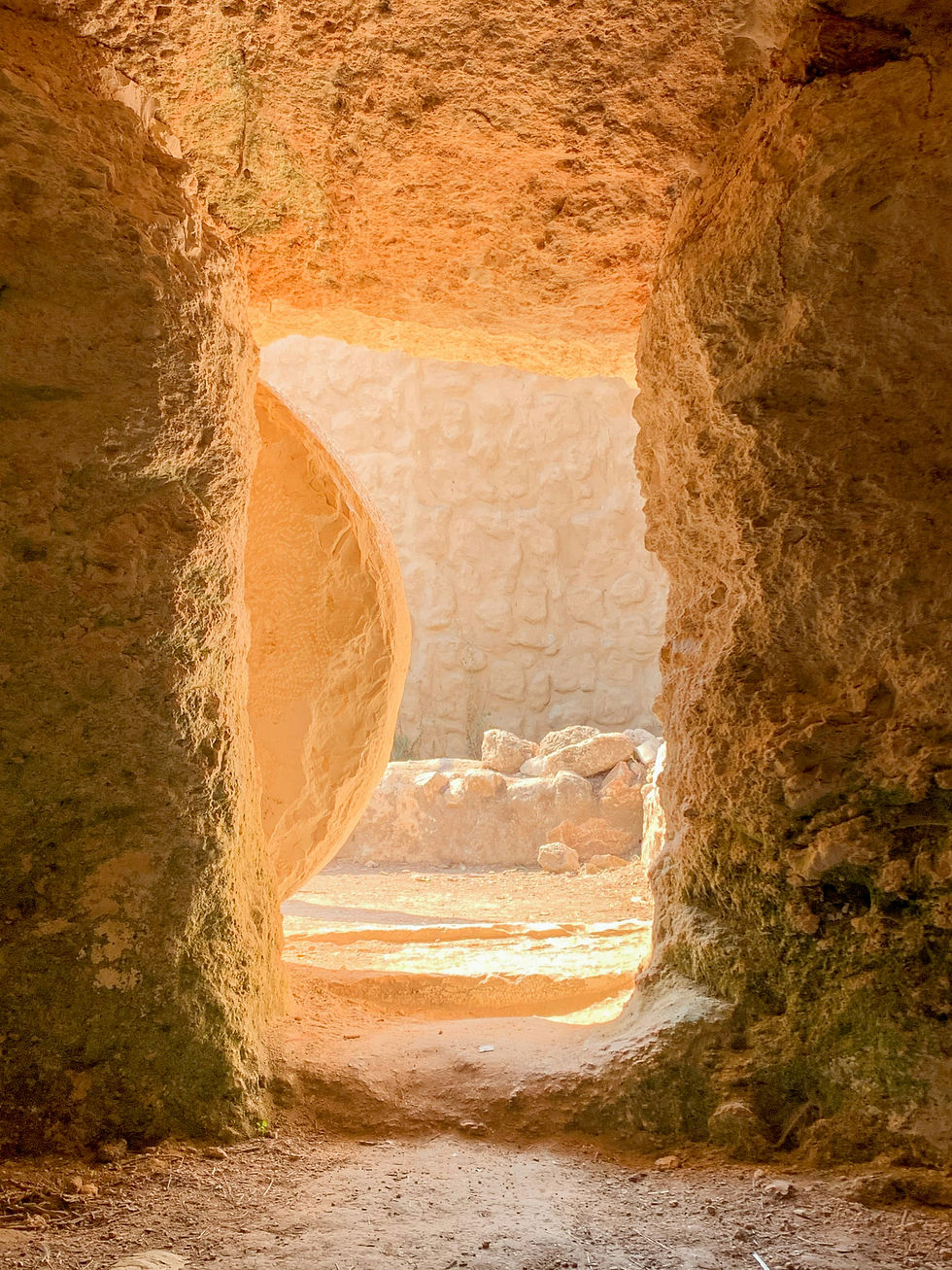
This does not mean Christians never die. It means death no longer has the final word, nor the ultimate authority. A deeper life is already at work—quietly, persistently—within mortal bodies.
If death entered humanity through separation from God’s life, then life returns through reunion with Christ. Immortality enters not at the moment of death, but at the moment of union.
This is why the New Testament speaks so often of being in Christ. Union is not metaphor. It is participation. Christ’s life becomes the believer’s life. His resurrection becomes the pattern—and the power—of our own.
What If We’ve Been Waiting for What Has Already Begun?
What if eternal life is not simply something we hope for, but something we are learning to live into? What if immortality is not postponed until the grave, but quietly unfolding even now—through the Spirit who gives life to mortal bodies?
The gospel does not ask us to deny death’s reality. It asks us to question its authority.
Because resurrection is not just coming.
It has already begun.


Comments